
Why Workplace Harassment Training Matters Now More Than Ever
Understanding the Essentials of Harassment Prevention Training
A workplace harassment online course is a structured training program that helps employees, supervisors, and managers recognize, prevent, and respond to harassment at work. It typically covers legal standards, common forms of harassment, reporting steps, and bystander intervention so organizations can build safer, more respectful workplaces.
What to Expect from a Workplace Harassment Online Course:
- Duration: 30 minutes to 2 hours on average.
- Format: Self-paced, interactive modules with videos and assessments.
- Topics Covered: Sexual harassment, hostile work environment, quid pro quo, discrimination, retaliation, other forms of inappropriate conduct, and reporting.
- Certification: A certificate of completion is provided after successfully completing the course.
- Compliance: Designed to meet federal, state, and local legal requirements.
- Audience: All employees, with specialized versions for supervisors.
- Cost: Ranges from free awareness courses to paid comprehensive programs.
Workplace harassment isn’t rare or “just part of the job” its a widespread issue with very real costs. Approximately 71.4% of workers reported experiencing at least one form of harassment or violence in the workplace within the past two years, according to a landmark study by the Canadian Labour Congress (CLC) When harmful behavior goes unchecked, it can quickly turn into a toxic environment that drags down morale, increases turnover, and drives up absenteeism. It also creates serious legal and financial exposure for employers. Even one complaint or claim can trigger investigations, legal fees, settlements, and lasting reputational damage.
Proactive training is part of the solution. Online workplace harassment courses offer a scalable way to empower employees to recognize and report inappropriate behavior. For organizations, this training demonstrates a commitment to a respectful workplace while reducing liability.
To see how a workplace harassment online course can strengthen compliance and help build a more respectful culture, visit EEO Training. I am Andrew Botwin, CEO of EEO Training, and our team combines practical HR expertise, workplace investigation and facilitation experience, legal insight, and modern learning technology to deliver online training on anti-discrimination, sexual harassment prevention, workplace violence prevention, and bystander intervention, along with an LMS for assignment management, tracking, and completion. Our solutions support organizations across the US, UK, and Canada.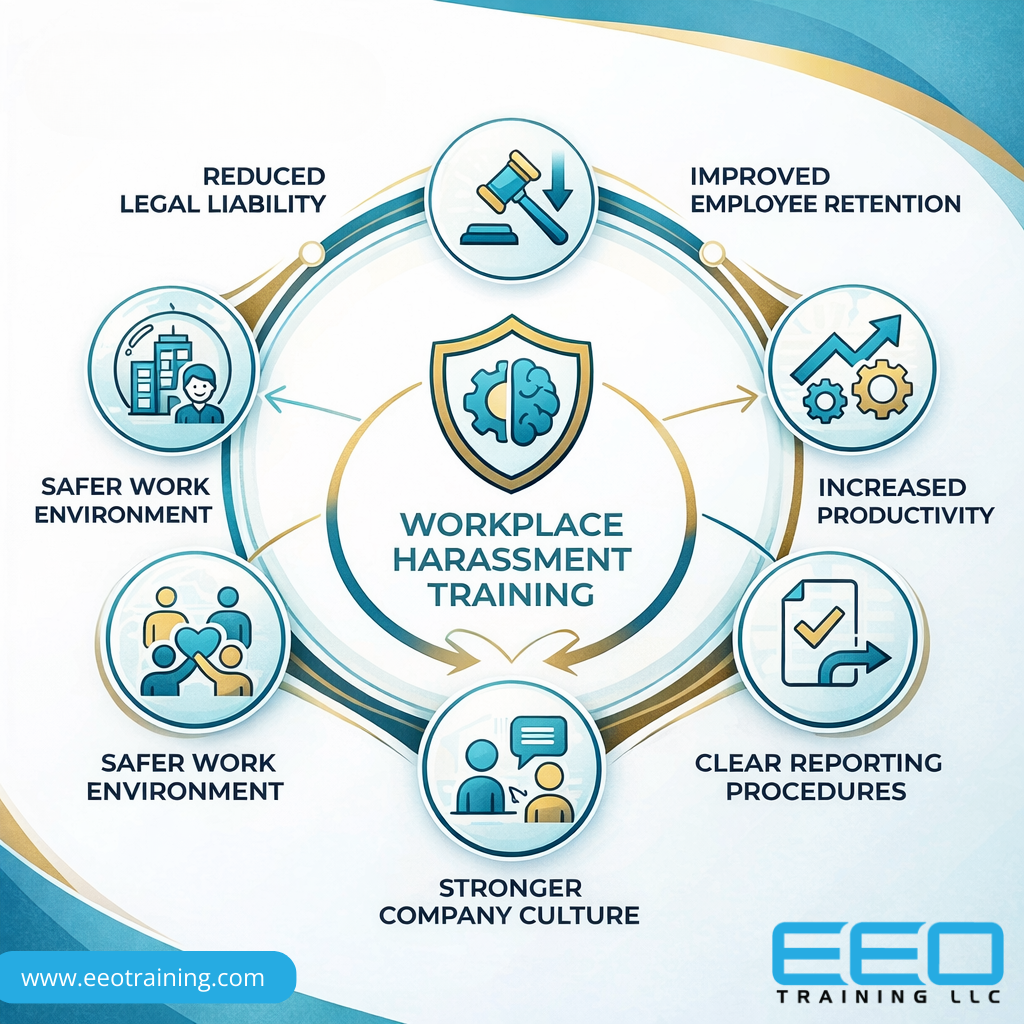
Understanding the Essentials of Harassment Prevention Training
The primary purpose of a workplace harassment online course is threefold: achieving legal compliance, fostering a respectful culture, and empowering employees. Our courses help organizations in the United States, Canada, and United Kingdom meet complex regulatory requirements. Beyond compliance, the training promotes positive interactions and gives employees the confidence to recognize, report, and prevent harassment.
The target audience includes all employees, with specialized training for supervisors, managers, and HR personnel who have distinct responsibilities. For individuals, training clarifies their rights and reporting options. For organizations, the benefits include reduced legal liability, improved employee retention, and a safer, more productive work environment.
To see how online harassment training supports both compliance and a healthier culture, visit EEO Training. We bring together practical HR experience, years of workplace complaint investigation and facilitation, legal know-how, and modern learning technology to deliver anti-discrimination and anti-sexual harassment training, workplace violence prevention, bystander intervention training, and an LMS to manage assignments, tracking, and completion. Our training solutions currently support organizations across the US, UK, and Canada.
Core Topics and Learning Objectives
A comprehensive workplace harassment online course covers essential topics to create a respectful and compliant environment. Key topics include:
- Defining Harassment and Discrimination: Understanding improper, offensive conduct and unfair treatment based on protected characteristics.
- Quid Pro Quo and Hostile Work Environment: Recognizing specific types of sexual harassment, from conditioning benefits on sexual favors to pervasive conduct that creates an hostile or offensive work environment.
- Bullying and Microaggressions: Addressing behaviors that harm morale and the subtle expressions of bias that impact marginalized groups.

The learning objectives are practical. Participants learn to recognize inappropriate behavior, understand their legal rights and obligations, and respond effectively, whether as a target, witness, or manager. Our courses use interactive scenarios, real-world examples, and original video-based modules to make learning effective and engaging.
For a deeper dive into how we address these critical issues, you can learn more about our Anti-Discrimination and Harassment Training.
Navigating Legal Compliance and Types of Harassment
Legal compliance is the foundation of any effective workplace harassment online course. Our training steers the legal frameworks in the United States (Title VII, EEOC guidelines, state laws), Canada (Canadian Human Rights Act, provincial regulations), and the United Kingdom (Worker Protection (Amendment of Equality Act 2010) Act of 2023).
We explain various types of harassment to provide clarity:
- Sexual Harassment: Unwelcome conduct of a sexual nature, including quid pro quo and hostile work environment harassment.
- Psychological Harassment: Repeated hostile conduct that harms an employee’s well-being.
- Cyberbullying/Online Harassment: Inappropriate behavior via email, chat, social media, or video conferencing.
- Retaliation: Adverse action against an employee for reporting harassment. Retaliation is involved in well over half of all discrimination charges filed with the EEOC.
- Third-Party Harassment: Harassment from non-employees like customers or vendors.
Our courses also integrate violence prevention, helping participants recognize warning signs and learn de-escalation strategies.
For more detailed information on preventing all forms of aggression in the workplace, we encourage you to visit our page on Workplace Violence Prevention Training. For our Canadian clients, a valuable legal resource is the Information on the Canadian Human Rights Act. For our United Kingdom clients, you can learn about the UK’s Requirements for Sexual Harassment Training.
Roles, Responsibilities, and Prevention Strategies
An effective workplace harassment online course clarifies the roles and responsibilities of everyone in the organization.
- Employer Responsibilities: Establish clear policies, provide effective training, investigate all complaints promptly, and ensure non-retaliation.
- Supervisor Responsibilities: Model appropriate behavior, address issues quickly, and prevent retaliation against those who raise concerns.
- Employee Responsibilities: Report incidents of harassment (whether experienced or witnessed), participate in training, and foster a respectful culture.
Key prevention strategies are integrated throughout our courses, such as bystander intervention. We teach employees actionable tactics to safely intervene when they witness harassment. This, combined with promoting open communication, empowers everyone to contribute to a safe environment where harassment is not tolerated.
To learn more about how we equip individuals with the skills to intervene safely and effectively, explore our Bystander Intervention Training.
Choosing and Implementing an Effective Workplace Harassment Online Course

Selecting the right workplace harassment online course is a strategic decision. It’s about finding the best fit for your organization’s culture and compliance needs.
Key considerations when choosing a course include:
- Content Quality: Is the content legally accurate, up-to-date, and relevant to your jurisdiction (US, Canada, UK)?
- Engagement Level: Does it use interactive elements, scenarios, and high-quality video to keep learners invested?
- Customization Options: Can you include your organization’s specific policies, branding, and reporting procedures?
- Compliance Tracking: Does the platform offer robust reporting and analytics to track completion and demonstrate due diligence?
Effective implementation involves seamless integration with your Learning Management System (LMS), a clear communication plan to explain the training’s importance, and flexible scheduling to ensure high completion rates.
We understand the importance of efficient management of your training programs. That’s why we offer robust features through our Learning Management System.
Evaluating a Workplace Harassment Online Course
When evaluating a workplace harassment online course, consider its structure, effectiveness, and cost. Some courses are self-paced, mobile-compatible, and take between 30 minutes and 2 hours to complete.
Effectiveness is measured through quizzes, assessments, and certificates of completion that serve as proof of training.
Costs vary, but comprehensive, compliant courses are typically priced competitively, with discounts available for larger teams through volume pricing. For details, visit the EEO Training Pricing page.
Typically, there are no prerequisites. Users just need a device with an internet connection and a modern web browser.
The Organizational Impact of High-Quality Training
Investing in a high-quality workplace harassment online course yields a significant organizational impact beyond compliance. It can transform your culture and safeguard your business.
Positive outcomes include reduced incidents of harassment, lower legal costs, and improved employee morale and productivity. As a risk management tool, training mitigates liability and protects your brand reputation. You can learn more about What is Employment Practices Liability Insurance?.
The most profound impact is the cultural shift toward trust and safety, empowering employees to speak up.
Taking the Next Step with a Workplace Harassment Online Course
A workplace harassment online course is most effective when part of a broader strategy.
Action Plan:
- Review Current Policies: Ensure your anti-harassment policies are clear, comprehensive, and compliant with laws in your operating regions.
- Select a Training Provider: Choose a provider with proven HR, legal, and tech expertise.
- Schedule Training for All Staff: Roll out training consistently to all employees, with specialized modules for supervisors.
Preventing harassment is an ongoing commitment. This requires regular refresher courses, policy updates, and gathering employee feedback to drive continuous improvement.
At EEO Training, we deliver practical, expert-led harassment prevention training built for today’s workplaces. Every course includes 100% original video content designed to keep learners engaged and help key concepts stick. For more guidance and updates, visit our Blog and FAQs.
Take action today to protect your employees and your organization. Learn more about Sexual Harassment Training Requirements for All 50 States and find how our workplace harassment online course can be your prevention cornerstone.
