
Working in a Hostile Work Environment: Signs and Next Steps

How to Recognize a Hostile Work Environment
If you’re working in a hostile work environment, record what happens and report it through your employer’s complaint process. According to the U.S. Equal Employment Opportunity Commission, a hostile work environment involves unwelcome conduct tied to a protected trait, such as race, sex, religion, age, or disability, that is severe or pervasive enough to make the workplace abusive. A workplace can be toxic without meeting that legal test, but harmful behavior still deserves attention.
For HR teams and business leaders, the first step is to take concerns seriously, respond promptly, and protect people who speak up from retaliation. Clear policies and effective workplace harassment training help employees recognize problems and know how to report them.
I’m Andrew Botwin, founder of EEO Training LLC. My decades of work in anti-harassment and anti-discrimination training have focused on helping employers prevent the conduct that can leave people working in a hostile work environment.
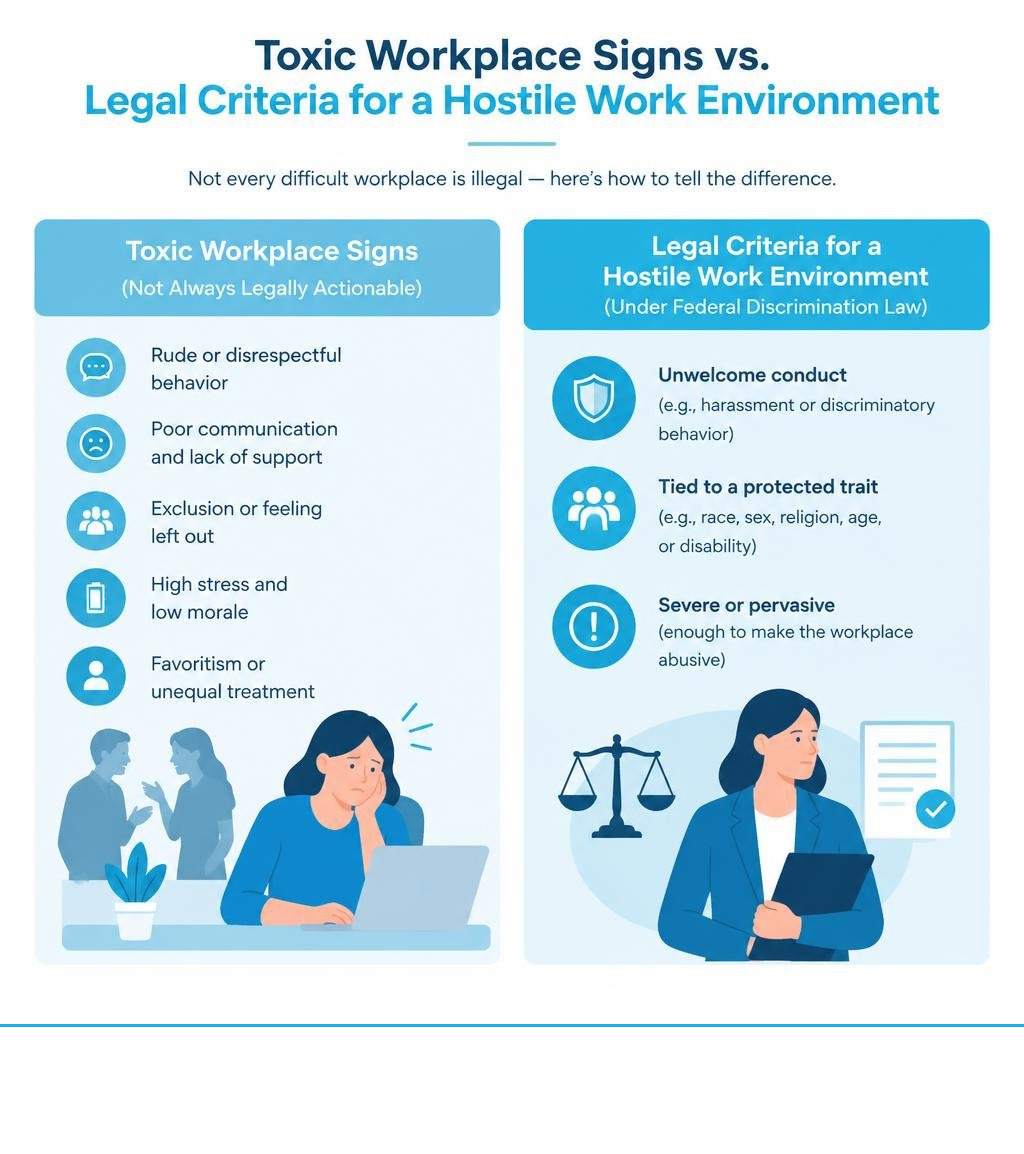
Legal Standards and Signs of Working in a Hostile Work Environment
Navigating difficult workplace dynamics requires understanding the line between unpleasant company culture and unlawful harassment. While bad management or rude colleagues make any workday miserable, the law sets specific criteria for what constitutes an illegal hostile working environment.
| Factor | Legally Actionable Hostile Environment | General Workplace Incivility / Toxic Culture |
|---|---|---|
| Legal Basis | Explicitly tied to protected traits (race, sex, age, disability, etc.) or retaliation | Personality conflicts, general rudeness, bad management |
| Legal Threshold* | Severe or pervasive conduct that alters working conditions | Petty slights, isolated rude comments, occasional outbursts |
| Standard Applied | Objective “Reasonable Person” / “Reasonable Victim” test | Subjective personal annoyance or workplace dissatisfaction |
| Employer Liability | Direct or vicarious liability under statutory EEO frameworks | Internal policy matters; generally not a statutory violation |
| Primary Remedies | EEOC complaints, back pay, compensatory damages, injunctions | Internal mediation, HR interventions, resignation |
*The severe or pervasive standard applies in most U.S. jurisdictions. Some states modify that standard. For example, New York uses language addressing petty slights.
Key Differences Between Toxic Cultures and Working in a Hostile Work Environment
Federal statutes such as Title VII of the Civil Rights Act of 1964 do not function as general workplace civility codes. An abrasive supervisor who yells at everyone equally or an organization with chaotic communication is undeniably toxic, but not necessarily violating civil rights laws.
To cross into illegality, the unwelcome behavior must be tied to a legally protected characteristic or involve unlawful retaliation. When identifying unlawful hostile work environment indicators, courts look at whether enduring the abuse becomes a condition of continued employment. This contrasts with quid pro quo sexual harassment, where tangible employment benefits (like promotions or raises) are explicitly conditioned on submitting to sexual demands.
Protected Classes, Workplace Mobbing, and Severe or Pervasive Conduct
Under federal anti-discrimination laws—including Title VII, the Age Discrimination in Employment Act (ADEA covering workers 40 and older), the Americans with Disabilities Act (ADA), and the Genetic Information Nondiscrimination Act (GINA)—workplace harassment is prohibited across specific protected classes:
- Race and color
- Religion and creed
- Sex, gender identity, pregnancy, and sexual orientation
- National origin
- Age (40+)
- Disability status (physical or mental)
- Genetic information
Judges evaluate whether conduct is “severe or pervasive” using a reasonable person standard. In landmark cases like Ellison v. Brady, courts introduced the “reasonable woman” standard to ensure that gender-based harassment is evaluated from the victim’s perspective.
Hostility can also take the form of group intimidation. Workplace mobbing health risks include serious physical and psychological impacts when a ringleader and coworkers systematically isolate, mock, and undermine an employee. Additionally, state laws can set distinct bars; for instance, Colorado POWR Act standards have modified federal thresholds by establishing state-specific definitions for actionable workplace harassment.
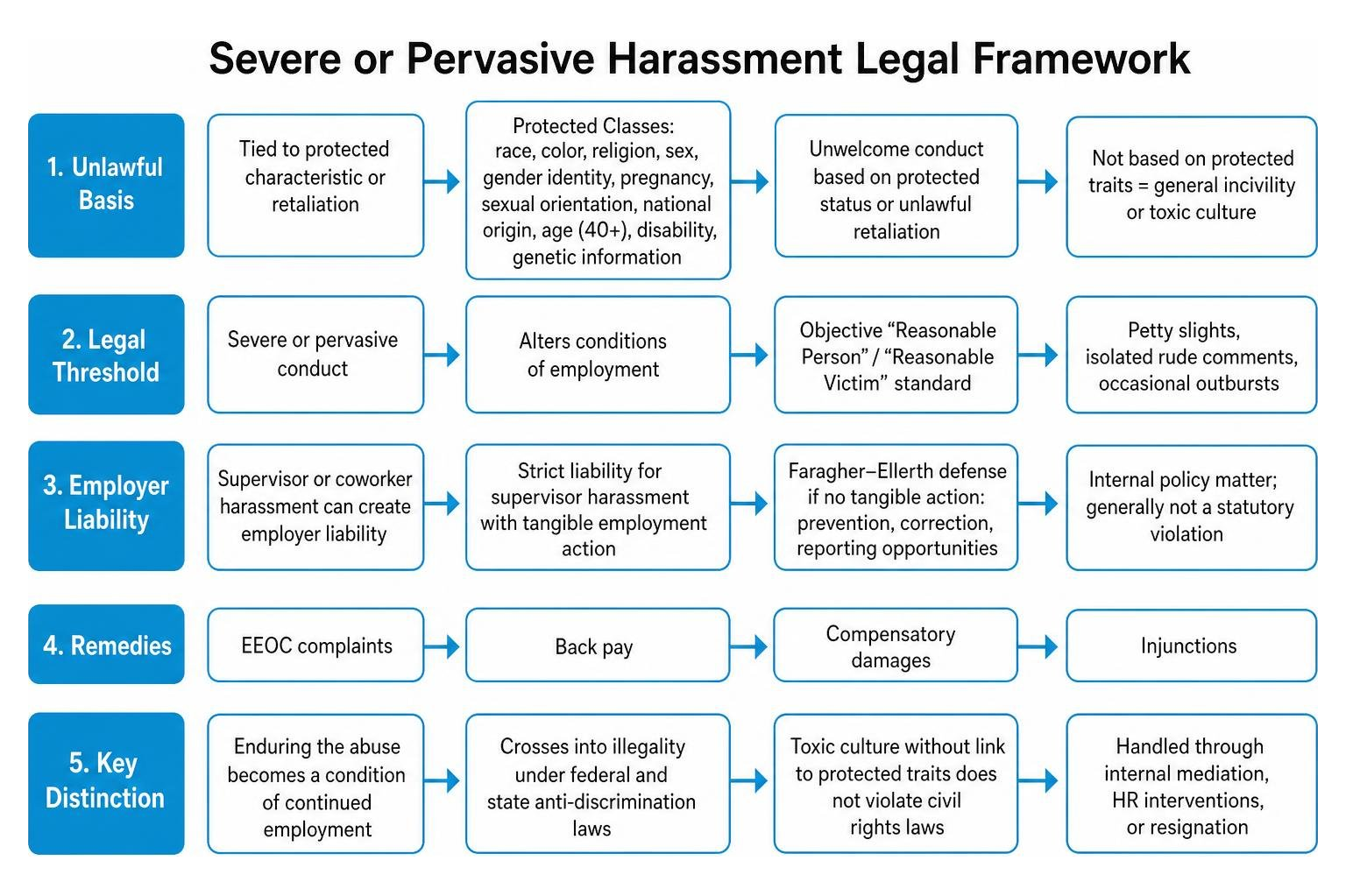
Employer Liability, Faragher-Ellerth Defense, and Retaliation Protections
Employer liability depends on the harasser’s role and the organization’s response:
- Supervisors: An employer is strictly liable if supervisor harassment results in a tangible employment action (such as termination, demotion, or undesirable reassignment). If no tangible action occurs, the employer can raise the Faragher-Ellerth affirmative defense by proving it exercised reasonable care to prevent and correct harassment promptly, and that the employee unreasonably failed to take advantage of preventative or corrective opportunities.
- Coworkers and Non-Employees: Employers are liable for harassment by coworkers, independent contractors, or customers if management knew (or should have known) about the conduct and failed to take immediate corrective action.
Hostile environments are also unlawful when used as retaliation against whistleblowers under statutes like Sarbanes-Oxley (SOX), Dodd-Frank, and the False Claims Act. To mitigate financial exposure from these claims, organizations often rely on employment practices liability insurance coverage alongside strict adherence to EEOC compliance guidelines.
Preventing Hostile Workplaces and Next Steps for Employers
Recognizing the Signs and Psychological Impact of Working in a Hostile Work Environment
Workplace hostility creates real mental and physical health consequences. Psychosocial hazards such as bullying, harassment, chronic conflict, and isolation can affect workers’ mental and physical health. The National Institute for Occupational Safety and Health identifies workplace psychosocial hazards as conditions that can contribute to stress-related health effects and should be addressed through prevention and organizational support.
Recognizing psychosocial workplace hazards is critical. Chronic exposure to emotional abuse, verbal degradation, and social ostracization triggers anxiety, depression, musculoskeletal pain, and cardiovascular strain.
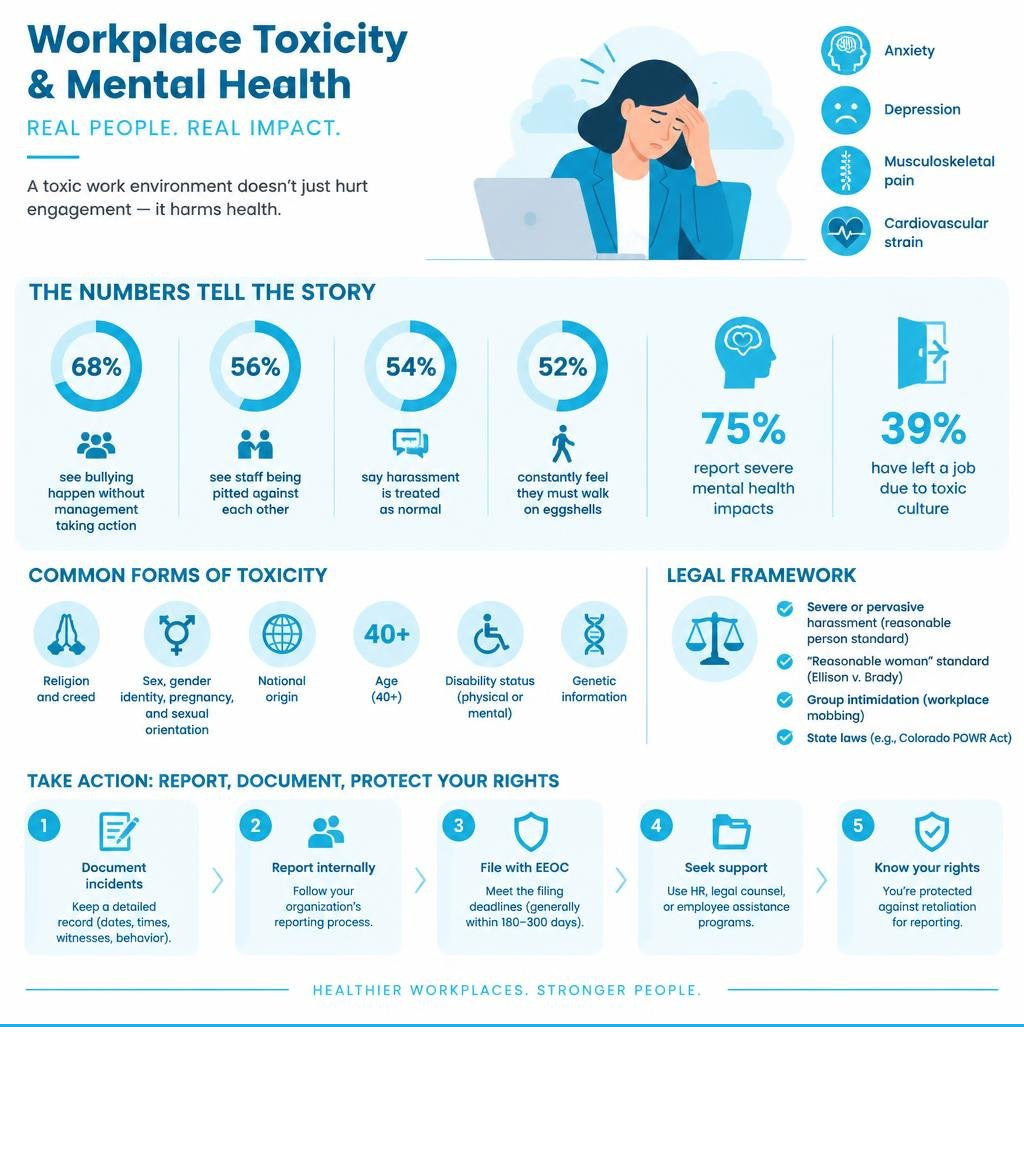
Step-by-Step Reporting, Evidence Documentation, and EEOC Filing Deadlines

When facing an abusive environment, taking strategic, documented action protects your rights:
- Prioritize Personal Safety and Direct Communication: If safe, inform the harasser directly that the behavior is unwelcome and must cease immediately.
- Maintain a Contemporaneous Log: Keep a detailed, private record noting dates, times, locations, exact statements, and witnesses. Preserve digital evidence like emails, chat logs, and voicemails outside company devices.
- Report Internally: Follow your company’s formal grievance procedures in writing to put management on legal notice.
- Understand Agency Deadlines: The EEOC’s filing-deadline guidance explains that private-sector employees generally have 180 days to file a discrimination charge, which may extend to 300 days when a state or local law also applies. Federal employees generally have 45 days to contact an agency EEO counselor.
- Consider Constructive Discharge: When intolerable working conditions force an employee to resign, courts may treat the departure as an unlawful constructive discharge.
Using structured, trauma-informed reporting approaches ensures that workplace disclosures are handled with fairness, empathy, and procedural consistency.

Proactive Compliance Training and Organizational Prevention Strategies
Preventing hostile environments requires more than distributing a static handbook once a year. Leadership must establish proactive safeguards through education, clear reporting pathways, and decisive intervention.
Employer Response Checklist
When an employer receives a harassment concern, a prompt and consistent response can reduce risk and help employees feel safe raising issues. A practical response should include:
- Acknowledge the report and assess immediate safety needs: Explain the next steps, identify any urgent risks, and consider interim measures that do not punish the reporting employee.
- Preserve relevant information: Secure complaint records, emails, messages, schedules, and other materials that may be needed for a fair review.
- Assign an impartial investigator: Choose a qualified person with no conflict of interest and define the scope of the review.
- Document findings and corrective action: Keep a clear record of interviews, evidence, conclusions, and the steps taken to address substantiated concerns.
- Reinforce anti-retaliation expectations: Remind involved parties that retaliation is prohibited, then check in after the investigation to identify any continuing concerns.
Practical employer note: Andrew Botwin’s workplace compliance experience reinforces that speed, neutrality, and follow-through matter. A written policy is only effective when managers know how to receive concerns respectfully, preserve information, and respond without retaliation.
At EEO Training LLC, we provide comprehensive online workplace compliance education across all 50 U.S. states, Canadian provinces, and the UK. Our training suite is delivered through an integrated, self-service Learning Management System (LMS) with on-demand reporting and simple administrative control:
- Anti-Harassment & Anti-Discrimination Training: Available for both supervisors and non-supervisors, our anti-discrimination and harassment training meets all federal standards and aligns with state-by-state harassment training mandates (such as California AB 1825, New York, and Illinois requirements).
- Bystander Intervention: Equipping coworkers to intervene safely using our specialized bystander intervention training programs stops toxic behaviors before they escalate into statutory violations.
- Violence Prevention & Safety: Courses in workplace violence prevention and Active Shooter Awareness—which covers defining active shooters, awareness of situations, basic safety concepts and protocols, worker readiness, the importance of a plan, Run-Hide-Fight, scenario preparation, dos and don’ts, interacting with law enforcement, and personal preparation—ensure total physical and psychological readiness.
All of our courses are available in English, French, and Spanish, featuring 100% original animated video vignettes—never boring stock footage or dry talking heads. Built for organizations from small businesses to enterprise teams in healthcare, hospitality, finance, and manufacturing, we make compliance seamless: Simple. Interactive. Compliant. Online. Start Training in Minutes — No Sales Call Required.
Frequently Asked Questions About a Hostile Work Environment
What is not a hostile work environment?
Rude management, personality conflicts, isolated disagreements, and a generally stressful workplace may be harmful, but they do not automatically meet the legal definition of a hostile work environment. In many cases, unlawful harassment involves unwelcome conduct connected to a protected characteristic or retaliation and is serious enough, or frequent enough, to affect working conditions.
Can one incident create a hostile work environment?
A single incident can be significant when it is especially serious, but the legal analysis depends on the full context. Employees should document what happened, preserve relevant communications, and use the employer’s reporting process when it is safe to do so.
Can an employee be fired for reporting harassment?
Federal anti-retaliation protections generally prohibit retaliation for reporting discrimination or harassment, participating in an investigation, or opposing conduct reasonably believed to be unlawful. Retaliation concerns should be documented and reported promptly. State and local protections, deadlines, and reporting options may differ.
About Andrew Botwin Esq, AWI-CH, SPHR, SHRM-SCP, PCC, MBA: Andrew Botwin, co-founder of EEO Training LLC, brings experience in workplace investigations, HR, coaching, and compliance training. His practical perspective helps organizations translate workplace violence prevention requirements into clear training, reporting, and response practices that support safer workplaces. Andy is a seasoned executive and independent workplace investigator and trainer with more than 30 years of experience working with companies across various levels.
